
"native products"
5000 article(s) found

Lim region of Ethiopia | what is the flavor of native species washed by limu Kossa Xhosa?
Professional coffee knowledge exchange more coffee bean information please follow the coffee workshop (Wechat official account cafe_style) Ethiopia Lim production area | limu Kossa Xhosa washing local native species flavor? Finding coffee on a farm is very rare in Ethiopia, but Gidey Berhe Retta is in Limu Kossa

Gedeo area of Yegashafi, Ethiopia | Alomo Cooperative washed local native species with full water.
Professional coffee knowledge exchange for more information on coffee beans, please follow the coffee workshop (Wechat official account cafe_style) Gedeo area of Yegashifi, Ethiopia. | what is the flavor of the native species washed by the Alomo Cooperative? The Aramo cooperative is located in the southwest of Ethiopia, which can be said to be a very typical cooperative of Yirgacheffe. Arlo.
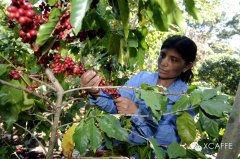
Red Honey Kiss 90 + rare good coffee treated with Ethiopian native red wine
Joseph Brodsky, the founder of Ninety +, discovered early that all the world's high-quality raw coffee beans originated in Ethiopia, and its different flavors of many different varieties are no less than 10, 000 grapes into 1 million different wines. Ninety percent of the raw beans come from the original varieties of Ethiopia, including Gesha of Manor Panama, which is also an Ethiopian heirloom (Heir).
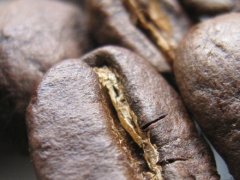
Three native species of coffee, Liberian species, Robusta species, Arabica species.
Coffee, we generally refer to the finished product: the coffee we drink, also refers to coffee beans. Coffee belongs to the evergreen shrub of the genus Coffee of Rubiaceae. Coffee has some medicinal effects, such as waking up the brain, strengthening the stomach, stopping bleeding, dissipating heat, strengthening the body, etc., hee hee, if anyone is blinded by love, have a cup of coffee to wake up! There are about 40 species of coffee plants, but they can produce commercially valuable

Dalle in Sidamo, Ethiopia | Honggut Hunkute treatment Plant washes local native species
Professional coffee knowledge exchange more coffee bean information please follow the coffee workshop (Wechat official account cafe_style) Ethiopia Sidamo production area Dalle | Honggut Hunkute processing plant washing local native species flavor? Located in the Sidamo producing area of southern Ethiopia, planted at 1600-1900 meters above sea level. After harvest, the peel and pulp were removed by washing and fermented in the factory for two days.

Flavor description and batch introduction of G1 water-washed ultra-high altitude native species in Yejiaxuefei Kokona treatment plant
For the exchange of professional baristas, please pay attention to the coffee workshop (Wechat official account cafe_style) Product name: Ethiopia washed Yega Xuefei Jetipu Kona processing Plant G1 production area: Jetipu Town, Kidio District, varieties: local excellent original species (Heiroom) altitude: 1900-2100 m treatment: traditional washing method Flavor description: flower fragrance. Oranges. Green Tea。 Cookies have been since the 20th

Ethiopian native species of fine coffee varieties
Honey kiss NekisseN2 [origin]: 90 + Ethiopian Wellega (Woliga) and Sidama (Hidamo) producing areas [season]: 2013-2014 [variety]: Ethiopian native species [Level]: 12 [altitude]: 17502000m [treatment]: sun [flavor]: taste clean, multi-layered. Peaches, berries, passion fruit and cream, milk skillful

Dilla producing area of Yegasuefei, Ethiopia | KOKE Coop Coco Cooperative washes local native.
Professional coffee knowledge exchange more coffee bean information please follow the coffee workshop (Wechat official account cafe_style) Ethiopia Yega Xuefei Dilla production area | KOKE Coop Coco Cooperative washing local native species G2 flavor? In Ethiopia, washed beans will be distinguished by adding G1 and G2 after the name (G1 is of better quality). Immediately after the coffee and cherry harvest is completed.

What is the coffee bean variety in Ethiopia? what are the taste characteristics of Yega Snow Coffa?
For more information on coffee beans, please follow the front street of Coffee Workshop (official Wechat account cafe_style)-A brief introduction to the Yegashafi region of Ethiopia in the early days of the third wave of coffee, native species were often used to describe Ethiopian coffee, but this is not an accurate statement. As people do not fully understand these varieties at all, it leads to many local hygiene.

Yejia Xuefei production area | Burka Silinga Black Lattice skirt treatment Plant Flavor of Local Native species of washed beans
Professional coffee knowledge exchange more coffee bean information please follow the coffee workshop (Wechat official account cafe_style) Yega Xuefei production area | Burka Silinga black plaid skirt treatment plant what is the native flavor of washed beans? The black plaid skirt processing plant is located in the famous Yega Sheffield area of Ethiopia. About 500 farmers hand over their coffee beans to the black plaid skirt cleaning station.

Lim producing area of Ethiopia | Nichols Nema Nigusie G3 traditional solarization native to the region
Professional coffee knowledge exchange more coffee bean information please follow the coffee workshop (Wechat official account cafe_style) Ethiopia Lim production area | Nicholas Nema Nigusie G3 traditional sun drying local flavor? Nichols Nema first tried to cry when one of the few sun-treated coffees at the DST auction held in Addis Ababa, Ethiopia, in 2000

Three native species of coffee, Arabica, Robusta.
Coffee, we generally refer to the finished product: the coffee we drink, also refers to coffee beans. Coffee belongs to the evergreen shrub of the genus Coffee of Rubiaceae. Coffee has some medicinal effects, such as waking up the brain, strengthening the stomach, stopping bleeding, dissipating heat, strengthening the body, etc., hee hee, if anyone is blinded by love, have a cup of coffee to wake up! There are about 40 species of coffee plants, but they can produce commercially valuable

How does the latest micro-batch Jietipu taste? introduction to the native species G1 of Yega Xuefei Sun-tanning Kochel
Professional barista communication please follow the coffee workshop (Wechat official account cafe_style) cup test 94 Ethiopia Yega Xuefei G1 Jettip (Ethiopia Natural Yirgacheffe Gedeb G1) flavor description: orange peel and other orange fruit notes, jasmine, lemon sugar, honey, frankincense, cream chocolate, rich acidity, smooth taste. Country of origin: Ethiopia

Three native species of coffee tree-Famine shipwreck Coffee Tree Code
Generally speaking, Robusta beans are poor in taste, have 2 to 3 times the caffeine content of Arabica beans, and are cheap, mostly for the large coffee industry to produce instant coffee or low-cost comprehensive products. The coffee trees planted in Arabica are suitable for planting on fertile hillsides with good drainage at an altitude of about 1000 to 2000 meters. The climate for growth should not be too humid, but it still requires a continuous rainy season and

Fine Coffee Science explains in detail the three native species of coffee
Coffee, we generally refer to the finished product: the coffee we drink, also refers to coffee beans. Coffee belongs to the evergreen shrub of the genus Coffee of Rubiaceae. Coffee has some medicinal effects, such as waking up the brain, strengthening the stomach, stopping bleeding, dissipating heat, strengthening the body, etc., hee hee, if anyone is blinded by love, have a cup of coffee to wake up! There are about 40 species of coffee plants, but they can produce commercially valuable
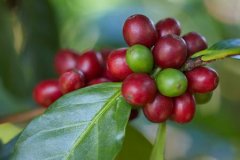
Ethiopia washed Yega native species Waka WorkaG1 boutique coffee beans with special flavor and flavor.
Factory name: Dazhen Coffee Qianjie Cafe location: Guangzhou Baoqian Street 10 manufacturer contact Information: 38364473 ingredients Table: self-baking shelf life: 90 net content: 227g packaging: raw and ripe coffee beans in bulk: whether coffee beans contain sugar: sugar-free origin: Ethiopia roasting degree: light roasting Ethiopia Washed Yirgacheffe Worka G1 country

The most basic knowledge that should be understood-- the three native beans of coffee
Coffee three primary bean species Arabica species (arabica): the origin of Ethiopia, equivalent to the rich and handsome coffee beans, is a precious coffee bean species. It is planted at an altitude of 700-2000 meters, accounting for 75-80% of the world coffee production. It has excellent flavor and aroma, low caffeine content, about 1-1.5% of its weight, but for dryness, frost damage and disease.
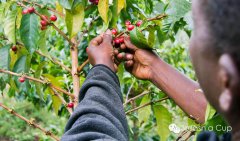
Yega Schiffe native species Woka Worka Manor Ethiopia Yega Sheffield grade G1
In fact, according to Ms. Knudsen, people started drinking fine coffee, but later, due to the growing demand for coffee, the discovery and use of new coffee varieties led to the decline of coffee quality. later, people even began to dislike this bad coffee and began to turn to other drinks. In this case, Ms. Knudsen's re-recognition

90 + Fine Coffee Honeykiss NekisseN2 Ethiopia Native species
Honey kiss (NekisseN2): [origin]: 90 + Ethiopia Wellega (Woliga) and Sidama (Hidamo) producing areas [season]: 2013-2014 [variety]: Ethiopian native species [Level]: 12 [altitude]: 17502000m [treatment]: sun [flavor]: taste clean, multi-layered. Peaches, berries, passion fruit and cream,

Red Honey Kiss (Nekisse Red N2) Ethiopian native species Wellega (Waliga) and
The second wave of coffee people are used to describing the essence of coffee with subjective rules of thumb.